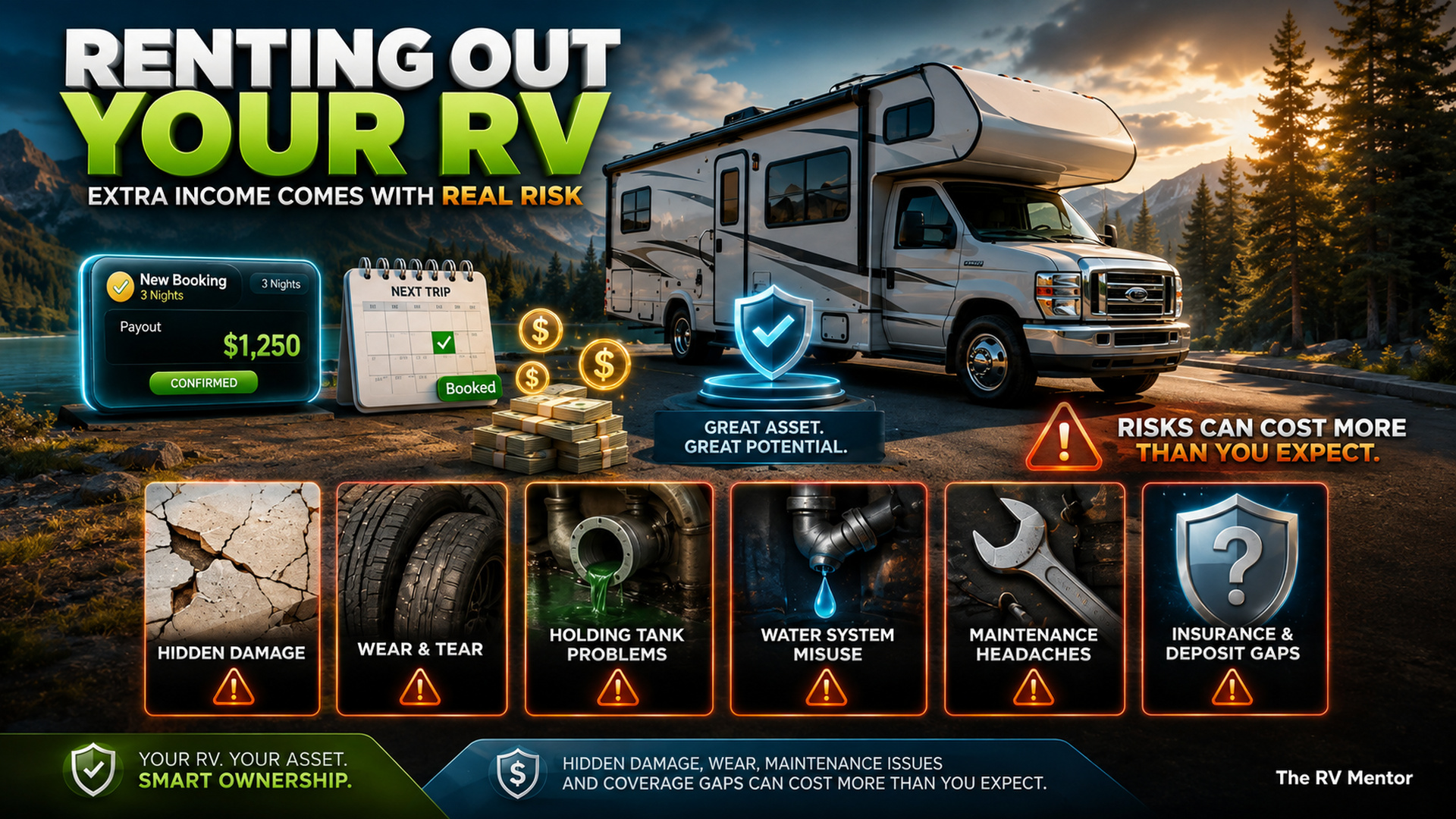
Renting out your RV when you are not using it can look like a smart way to offset ownership costs. RVs are expensive to buy, insure, store, and maintain, so earning income from downtime has obvious appeal.
The Idea Sounds Simple
For some owners, it can work. A well-maintained RV, rented to careful people, with clear rules and good documentation, may bring in useful income. But an RV is not a simple rental item. It is a vehicle, small home, plumbing system, electrical system, propane system, and appliance package all in one. That makes the risk much higher than many people expect.
The Real Risk Is Misuse
Most renters are not careless on purpose. The bigger problem is that many do not understand RV systems.
They may misuse holding tanks, overload electrical circuits, run the water heater dry, drain batteries, ignore tire pressure, damage an awning, or force a slide-out when something is not right. Some problems show up later as odours, leaks, clogged tanks, weak batteries, broken latches, or appliances that suddenly fail.
Hidden damage can also exceed, or fall outside, a damage deposit, especially if it is discovered after return or disputed as wear, maintenance failure, or improper operation.
Hidden Damage Is Hard to Prove
A renter may return the RV looking fine. Days later, you may notice a roof scrape, cracked vent, damaged tire, stained upholstery, sewer smell, leaking fitting, or slide mechanism that no longer sounds right.
Was it renter damage, normal wear, poor operation, or a part that was already failing? Once there is a dispute, proof matters more than opinion.
You May Not Be Able to Prove Who Caused It
Hidden damage is especially difficult because you may not be able to pin the cause on one specific renter. A slow leak, stressed slide mechanism, weakened battery, clogged tank, damaged tire, or failing appliance may have been caused by one renter, several renters, poor operation, normal wear, or a pre-existing issue that finally showed up.
That matters because costs are often not recoverable unless you can clearly show when the damage happened and who caused it. A damage deposit may not be enough, and insurance or protection plans may not cover damage that is disputed, delayed, mechanical, or classified as wear and tear.
This is why casual handoffs are risky. You need detailed photos and videos before and after every rental, including the roof, tires, awning, slides, interior, appliances, tank readings, water system, batteries, propane, mileage, fuel, and existing damage.
Insurance May Not Be Enough
Do not assume a rental agreement, protection plan, or insurance policy covers everything. Mechanical failures, interior damage, improper operation, cleaning problems, tank issues, lost income, depreciation, and wear and tear may not be handled the way you expect.
Your own RV policy may also restrict rental or commercial use. Before renting, get clear answers in writing about what is covered, what is excluded, who pays the deductible, and who decides whether damage was pre-existing, accidental, mechanical, or renter-caused.
Wear and Tear Is Guaranteed
Even a good rental adds wear. More people means more door slams, cabinet use, toilet use, tank dumping, tire miles, generator hours, appliance cycles, and chances for careless handling.
That does not make renting automatically wrong. It simply means the income must be measured against real costs: repairs, cleaning, inspections, maintenance, depreciation, downtime, and stress.
When It Can Make Sense
Renting may make sense if your RV is newer, simpler, well-maintained, easy to operate, and not emotionally precious to you. A basic trailer may be a better candidate than a complex motorhome loaded with slides, electronics, air systems, hydronic heat, and expensive appliances.
You also need the right mindset. If every scratch will bother you, renting will probably drive you crazy. If you treat the RV as a business asset and price it accordingly, you may handle the bumps better.
The Bottom Line
Renting out your RV can produce useful income, but it is not passive income. It is a small rental business built around a complicated, fragile, depreciating machine.
The reward is extra money. The risk is damage, disputes, downtime, insurance confusion, accelerated wear, and the discovery that someone else used your RV very differently than you would.
Before you rent it out, ask yourself one blunt question:
If this RV came back with damage, odours, tank problems, mechanical issues, or an insurance dispute, would the income still feel worth it?
For some owners, yes. For others, the smartest rental decision is keeping the keys in their own pocket.