If you put miles on an RV, eventually something will break, possibly leaving you stranded on the roadside. A solid recovery plan matters even more when you travel in remote areas.
How a recovery begins
When you contact Coach-Net, they usually connect you with a technician first. That person tries to determine the possible cause, whether there is a safe roadside fix or whether a tow or recovery is required.
If a tow is needed, Coach-Net usually needs a destination before it can hire a local towing service. The company may first have to contact repair facilities to confirm who can work on your rig. After hours, that confirmation can take time, and several repair shops may have to be contacted.
Finding the right equipment
Only after Coach-Net knows where the RV is going can it choose a towing company with the appropriate equipment. A large motorhome may require heavy-duty equipment, and the closest tow truck may not be the right one—or the necessary equipment may not be immediately available.
Our Arctic Circle recovery
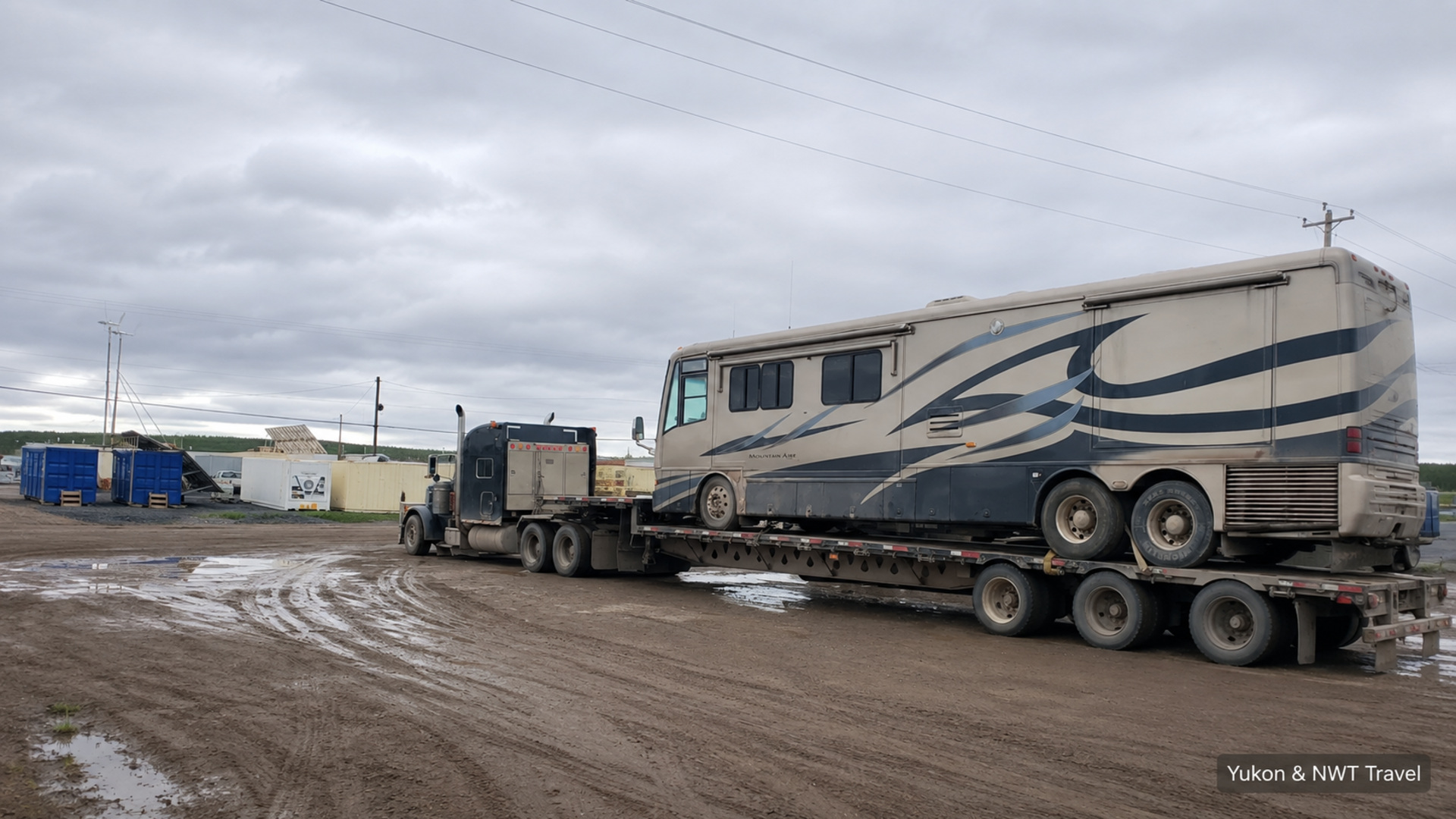
When we needed Coach-Net about 145 kilometres north of the Arctic Circle, I first contacted them around 1:00 p.m. It took about eight hours for a truck with a lowboy recovery trailer to reach our remote location. During that wait, Coach-Net arranged for police officers from the nearest detachment to make sure we and our rig were safe.
A repair shop 190 kilometres north, in Inuvik, said it could do the job, but it could not. Coach-Net then put our rig on another trailer and hauled it another 1,225 kilometres to Whitehorse, where a repair shop found and fixed a single shorted wire that had cut power to the engine’s computer system.
Our combined 1,400-kilometre tow cost us $0.00.
Safety comes first
The waiting is frustrating, but there is usually more happening behind the scenes than simply calling the first available tow truck. In the meantime, the most important thing is to make sure you are safe.