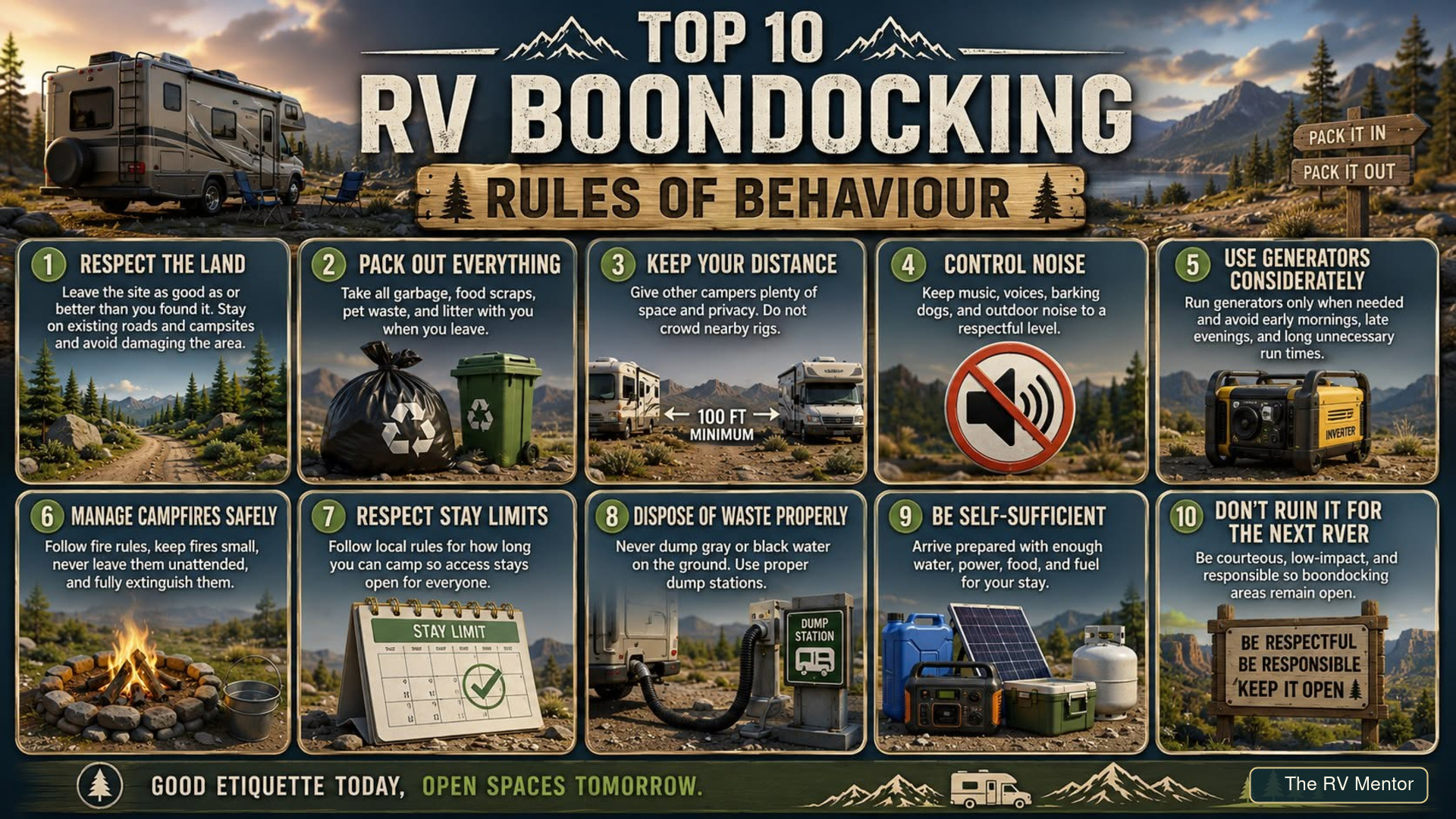
Leave the area as good as, or better than, you found it. Stay on existing roads and campsites, and avoid damaging plants, soil, or fragile ground.
Pack Out Everything
Garbage, food scraps, pet waste, cigarette butts, and broken gear all leave with you. “Biodegradable” is not a free pass to litter.
Keep Your Distance
Do not park right beside another boondocker unless space is limited. People boondock for peace, privacy, and breathing room.
Control Noise
Keep music, barking dogs, loud voices, generators, and outdoor TVs under control. Sound carries a long way in quiet places.
Use Generators Considerately
Run generators only when needed, and avoid early mornings, late evenings, or long unnecessary run times. Solar is your friend; generator fumes are not.
Manage Campfires Safely
Only have fires where allowed, keep them small, never leave them unattended, and make sure they are dead out. One careless fire can close access for everyone.
Respect Stay Limits
Know and follow the local rules for how long you can stay. Overstaying is one of the fastest ways to get boondocking areas restricted or shut down.
Dispose of Waste Properly
Never dump gray water, black water, or trash on the ground. Use proper dump stations. Nothing says “bad camper” faster than leaving your sewage behind.
Be Self-Sufficient
Arrive with enough water, power, food, fuel, and common sense. Boondocking is not campground camping without hookups; it requires planning.
Don’t Ruin It for the Next RVer
Be courteous, low-impact, and responsible. Every bad campsite, dumped tank, fire scar, or pile of garbage gives land managers another reason to close the gate.